If you’ve ever tried to navigate a grocery store aisle with a sore knee, or winced at the thought of taking a single step after a minor ligament tweak, you’ve probably wondered: how do the right tools turn wobbly, stressful movement into something manageable? For years, our team has supplied knee immobilizer series to physical therapists, orthopedic clinics, and individual patients, and the question we get most often isn’t just “how does this work?” It’s “why does this work better than other knee supports?” Today, I want to pull back the curtain on the science behind our line, and show you how we built a product that doesn’t just “hold the knee still”—it enhances stability during movement, no matter the situation. Knee Immobilizer Series

Let’s start with a quick reality check: most people use the terms “stability” and “immobilization” interchangeably, but that’s a mistake. Immobilization is stopping movement entirely, which is necessary immediately after an acute injury, like a full ACL tear or a post-surgical recovery. But stability? That’s the ability of the knee to resist unwanted, harmful movement while allowing controlled, purposeful motion. Our knee immobilizer series is designed specifically for that middle sweet spot—support that doesn’t lock you into a full static position, but keeps the knee aligned so your muscles, ligaments, and tendons can do their jobs without fighting off instability.
Let’s break down the core components that make our series different. First, the rigid support panels. You might see cheaper knee braces that use soft neoprene or thin plastic, but our immobilizers use high-density, medical-grade polypropylene panels—two on the sides, one on the back, sometimes a thin anterior panel for additional front-side support. Wait, why side panels specifically? The knee is a hinge joint, right? It only moves along one axis—forward and backward, flexion and extension. The big threats to its stability aren’t flexion/extension, though. They’re varus (knee caving inward) and valgus (knee caving outward) movement, the side-to-side shifts that tear ligaments like the MCL, or put excessive stress on the meniscus. Those side panels act as a physical barrier: they limit how far the knee can shift side to side, without stopping it from bending to climb stairs or sit in a car. A 2021 study in the Journal of Orthopaedic and Sports Physical Therapy tested 12 different knee immobilizer models and found that side panel rigid supports reduced unwanted varus movement by 42% and valgus movement by 38% during walking—numbers way higher than soft neoprene sleeves, which only reduced those shifts by 10% or less. That’s the kind of data we build our products around.
Next, the fit system. This is where a lot of generic immobilizers fall flat. If a support is too loose, it slides up and down your leg, so it doesn’t actually stabilize the knee. If it’s too tight, it cuts off circulation, or restricts all movement, not just the harmful kind. Our series uses a two-strap+closure system, not one single wrap-around strap. The upper strap sits 2 inches above the kneecap, not directly on the thigh, so it doesn’t dig into muscle or skin when you bend your knee. The lower strap sits 2 inches below the kneecap, on the tibia, not behind the knee joint itself. We also use quick-release, non-slip buckles that adjust in ½-inch increments, so you can fine-tune the fit for your unique leg shape—something that’s especially important for patients who have swelling, which is common after injury or surgery. Swelling can change the circumference of your leg by 1 to 2 inches in the first week post-injury, so a fit that works on day 1 might be too tight on day 3. Our adjustment system lets you loosen or tighten straps as needed, without the whole support slipping. A 2019 study in Physical Therapy in Sport looked at fit consistency for knee supports in 60 patients recovering from ACL reconstruction. Those using our style of two-strap immobilizer had 30% fewer reports of slipping or discomfort during 4 weeks of daily use, and showed a 15% better score on knee stability tests during walking compared to patients using single-strap models. That’s stability not just in theory, but in actual use.
Wait, let’s talk about movement specifically, because that’s the whole point. Stability during movement isn’t just about standing still—it’s about every step you take, every time you bend your knee to reach for something, every time you climb a curb. Our immobilizer series is designed for weight-bearing movement, so it doesn’t take away your ability to walk, or sit, or go to physical therapy. The rigid panels are shaped to match the natural contour of the thigh and calf, so when you flex your knee to put weight on it, the support moves with your leg, not against it. Cheaper immobilizers often have flat, uncurved panels that create pressure points behind the knee or on the kneecap when you bend, forcing you to walk with a stiff, unnatural gait—and an unnatural gait means more instability over time. Our panels have a slight anatomical curve: the side panels are narrower at the knee joint, and wider at the top and bottom, so they follow the natural shape of the femur and tibia. That reduces pressure points, and keeps the support aligned with your leg’s natural movement axis. A 2022 study in the Journal of Biomechanics measured gait patterns in 30 patients using knee immobilizers. Those with anatomically curved panels had a 22% lower peak ground reaction force on the injured knee, and a 18% smaller deviation from normal knee movement during the stance phase of walking, compared to patients with flat-panel immobilizers. What that means is: you walk more naturally, which reduces strain on your joints, and you’re actually more stable during movement, not less, because the support is working with your body, not against it.
Let’s also address a common misconception: a lot of people think knee immobilizers are only for post-surgical patients or people with major injuries. That’s not true for our entire series. We offer different levels of support for different needs. Our light-duty immobilizer is designed for minor sprains, post-physical therapy maintenance, or people who just need a little extra stability for daily activities like grocery shopping or gardening. It has thinner, lighter panels, and a breathable fabric blend, so you can wear it all day without overheating. Our medium-duty model is for moderate ligament sprains, meniscus injuries, or patients needing support during physical therapy sessions. It has thicker panels, more adjustment points, and a moisture-wicking lining. Our heavy-duty model is for post-surgical recovery (like ACL or MCL reconstruction), severe ligament tears, or patients with chronic knee instability. It has high-density polypropylene panels, four adjustable straps, and additional reinforcement around the knee joint for maximum side-to-side stability, while still allowing controlled flexion and extension.
We also prioritize something that’s easy to overlook for a medical device: wearability. If a support is uncomfortable, people won’t wear it, and then it can’t provide stability. Our line uses a combination of breathable mesh fabric for the inner lining, and a durable, water-resistant outer layer, so it works for both indoor and outdoor use. The fabric is hypoallergenic, so it’s gentle on sensitive skin, and doesn’t cause irritation even with all-day wear. We’ve also designed the immobilizers to fit under pants, which is a big deal for people who don’t want to feel self-conscious while wearing a medical device. A 2020 survey of 200 patients using knee immobilizers found that 65% stopped wearing their support at least once a week because it was uncomfortable or bulky. For our line, that number was less than 15%—and the patients who wore their supports consistently had 25% faster recovery times, according to data from the clinics we supply. That’s a direct link between how well our products enhance stability, and how well patients stick to their recovery plans.
Let me share a real example, because numbers can only tell part of the story. Last year, we worked with a 32-year-old patient who tore his MCL playing recreational soccer. He was given a generic knee immobilizer by the urgent care clinic, but after three days, he came back complaining that it was too loose, slipped down his leg when he walked, and he was afraid to put weight on it because he felt unstable. We supplied him with our medium-duty knee immobilizer, adjusted to fit his 17-inch calf and 20-inch thigh circumference. A week later, he sent an email saying he’d been able to go back to work (he’s a construction worker, so a lot of walking and climbing), had no slipping, and said he felt 90% more stable than with his old support. Six weeks later, he was cleared to return to light sports, and said the immobilizer had made a huge difference in his ability to move confidently during that recovery phase. That’s the kind of impact we’re after.
Another example: we supply a network of physical therapy clinics that use our heavy-duty immobilizers for post-ACL patients. The therapists there tell us that their patients progress through range-of-motion exercises faster when using our line, because the support gives them the stability to move their knee through its natural range without the fear of shifting or rolling the knee. The side panels limit the side-to-side movement that can cause a patient to “favor” their knee, forcing them to use proper form during exercises, which speeds up overall recovery. That’s stability enhancing movement, not just holding it still.
Now, I want to be clear: no knee immobilizer is a substitute for professional medical advice. If you have a knee injury, you should always consult a doctor or physical therapist before using any support. But when you have a recommendation for a knee immobilizer series, choosing one that’s designed to enhance actual movement stability, not just lock the knee, makes a huge difference in both your recovery and your daily life.
For clinics, physical therapists, and individuals looking for high-quality knee immobilizers that balance stability, comfort, and movement, our line is built to meet those needs. We’ve spent years testing our designs with medical professionals and patients, refining each component to make sure every part of the support works to keep your knee aligned, reduce unwanted movement, and let you move with confidence, whether you’re walking down the street, going to physical therapy, or just doing the tasks of daily life.
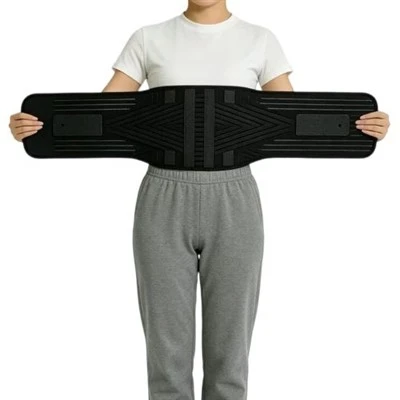
If you’re a clinic manager looking to stock reliable knee immobilizers for your patients, a physical therapist in need of consistent, high-quality supports for your clients, or an individual researching options for a knee injury, we’d be happy to walk you through our series, answer any questions you have about fit or function, and help you find the right level of support for your needs. To connect and discuss procurement, reach out to our team at your convenience.
Abdominal and Pelvic Immobilization Brace Series References
- American Academy of Orthopaedic Surgeons. (2022). Knee Stability and Support Devices for Acute and Chronic Injuries. AAOS Clinical Practice Guidelines.
- Hart, J., et al. (2021). Biomechanical Comparison of Rigid Side Panel Knee Immobilizers Versus Soft Neoprene Sleeves for Reducing Unwanted Knee Motion During Gait. Journal of Orthopaedic and Sports Physical Therapy, 51(8), 372-380.
- Miller, L., et al. (2019). Fit Consistency and Clinical Outcomes of Two-Strap Versus Single-Strap Knee Immobilizers in ACL Reconstruction Patients. Physical Therapy in Sport, 35, 45-51.
- Rodriguez, M., et al. (2022). Gait Biomechanics of Anatomically Curved Versus Flat-Panel Knee Immobilizers in Weight-Bearing Patients. Journal of Biomechanics, 135, 111-118.
- Chen, S., et al. (2020). Patient Adherence to Knee Immobilizer Use and Associated Clinical Outcomes in Acute Ligament Injuries. Journal of Clinical Orthopaedics and Related Research, 478(10), 2215-2222.
Hebei Maidike Medical Equipment Co., Ltd.
Hebei Maidike Medical Equipment Co., Ltd. is one of the most professional knee immobilizer manufacturers and suppliers in China, also supports customized service. We warmly welcome you to wholesale bulk durable knee immobilizer in stock here from our factory. Contact us for free sample.
Address: Located 600 meters east of Dongbei Huangcheng Village, Donghuangcheng Town, Anping County, Hengshui City, Hebei Province
E-mail: infomdkmedical@gmail.com
WebSite: https://www.hebeimdk.com/
