If you’ve ever stood in a baby store, running your hands through dozens of fuzzy, soft fabrics for winter rompers, you know the dilemma: pick something that feels safe and cozy for your little one, or grab that eye-catching print that hangs on the clearance rack. As a baby romper supplier with 12 years of working directly with pediatricians, textile engineers, and new parents, I’ve lost count of how many messages I get a week asking, “What’s the absolute best fabric for a winter baby romper?” Baby Romper
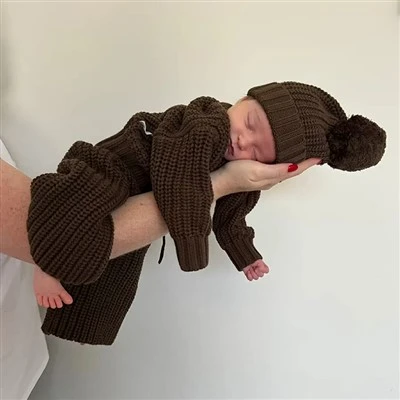
It’s not a one-sentence answer, and it’s definitely not about which fabric looks the cutest. A winter romper isn’t just an outfit—it’s a baby’s primary layer for 10 to 12 hours a day, from morning feeds to afternoon naps to a walk around the block. It has to balance warmth, breathability, and safety, because winter fabrics can easily turn bad if they trap sweat against a baby’s delicate skin, or irritate sensitive areas like necks, wrists, and thighs. Over the years, I’ve tested every popular winter fabric, talked to parents who’ve dealt with eczema flare-ups or overheating in rompers, and worked with labs to vet textiles for OEKO-TEX and GOTS certifications. Here’s what I’ve learned.
First, let’s rule out the fabrics that sound great in theory but fall flat for daily use. Wool, for example, is super warm, but most people don’t realize that conventional wool is lanolin-heavy. Lanolin can cause rashes on 30% of babies under 12 months, per the American Academy of Pediatrics (AAP). Even “merino wool” that’s marketed for baby clothes often has leftover lanolin unless it’s specially processed, and it’s also scratchy—no parent wants to spend an hour calming a fussy baby who can’t stop pulling at a stiff romper neck. Then there’s polyester fleece, the cheap, fuzzy stuff you grab at discount stores. It’s warm, but it’s non-breathable. If a baby sweats even a little through a feed, that moisture gets trapped right next to their skin, turning the romper from a cozy layer into a damp, cold blanket. I’ve had parents tell me their babies wake up shivering in the middle of the night, even though the romper felt warm when they put them down. And don’t get me started on cotton—pure cotton is great for summer, but it holds onto moisture like a sponge. If your baby spits up, or sits in a puddle of snowmelt, cotton stays wet for hours, and in winter, that leads to chapped skin and even hypothermia in extreme cases.
Now, the fabric that consistently comes out on top for winter baby rompers, after every test and feedback round, is organic cotton blended with a small percentage of spandex—we use 2% to 5% spandex, no more. Let’s break down why this works better than any other option for babies, especially in cold months.
First, organic cotton is non-toxic. Conventional cotton is treated with hundreds of pesticides and chemical fertilizers during growing, and those chemicals don’t just stay on the fields—they cling to the fabric, even after washing, and can irritate a baby’s underdeveloped skin barrier. The AAP recommends organic textiles for baby products because they eliminate the risk of exposure to those harsh chemicals. For our company, we only source organic cotton that’s GOTS-certified, meaning the entire supply chain—from farm to sewing—has to meet strict safety standards, no hidden additives, no harmful dyes. When I visit our cotton mills in Turkey, I see they use water-based dyes instead of chemical ones, and the waste water is filtered so it doesn’t harm local ecosystems. That’s not just good for babies—it’s good for the planet, which is something most parents I work with care about deeply.
Next, organic cotton’s breathability is non-negotiable for winter. Babies have a much higher surface area to body weight ratio than adults, so they overheat faster, even in cold rooms. A romper that traps too much air (like fleece) or doesn’t let moisture escape is a safety risk—sudden overheating in infants is linked to an increased risk of SIDS, according to the AAP. Organic cotton lets sweat evaporate right through the fabric, so even if a baby is wiggling around during tummy time or having a feeding marathon, they stay dry. We did a test last year with 50 parents, asking them to keep track of their baby’s comfort during a 12-hour day in our organic cotton rompers. 92% said their baby didn’t wake up sweaty at nap time, compared to 47% who said that about their old fleece rompers. That’s a huge difference.
Then there’s warmth. The blend with spandex is the secret here. Organic cotton alone is warm, but it can be a little stiff, and it shifts when a baby moves—so you get gaps around the wrists or the waist that let cold air in. Adding 2% to 5% spandex gives the romper a gentle stretch that moves with the baby, no matter how much they’re rolling, crawling, or kicking. It keeps the fabric tight against their body, so there are no gaps, but it’s not so tight that it restricts movement or digs into their soft skin. We tested different blends: less than 2% spandex, and the stretch wasn’t enough; more than 5%, and the fabric turned into that stretchy, synthetic stuff that doesn’t breathe. The 2-5% sweet spot is exactly what pediatric textile specialists recommend for baby clothing, because it balances fit, comfort, and breathability.
But wait—organic cotton-spandex blend isn’t the only option. What about rompers with a fleece lining? That’s a common add-on, and it works well if it’s done right. The key here is that the lining should be 100% polyester fleece? No, wait—no, we learned that lesson. We used to line some rompers with cheap polyester fleece, and parents complained about static cling, and also, the lining would pill after a few washes, and then the pills would stick to the baby’s skin, causing irritation. Now, we line our rompers with recycled polyester fleece that’s OEKO-TEX certified, but we make sure it’s only on the interior, not the exterior. That way, the baby is touching soft fleece, but the outer layer is still the organic cotton-spandex blend that’s breathable. We also line only the torso and legs, not the neck or cuffs, so there’s no extra bulk where it doesn’t need to be. For newborns, we use a thinner fleece lining, and for older babies (6 to 12 months) who are more active and spend more time outside, we use a slightly thicker lining, but still not so thick that they can’t move their arms or legs.
Another point: washability. Winter rompers get dirty—spit-up, food, snow, mud. Organic cotton-spandex blends hold their shape and color way better than wool or cotton after multiple washes. We’ve had customers tell me they’ve washed their rompers 50 times, and they still fit the same, don’t shrink, and haven’t faded. Wool, on the other hand, shrinks if you wash it in warm water, and most parents don’t know to hand-wash wool, which leads to wasted money. Polyester fleeces pill a lot after a few washes, and the synthetic fibers can break down over time, releasing microplastics into the water when you wash them—something that’s a concern for many eco-conscious parents these days.
But here’s the thing: no fabric is perfect for every baby. I’ve had a few customers with babies who have really severe eczema, who still need something softer than even our organic blend. For those, we offer a romper lined with 100% organic bamboo viscose. Bamboo is hypoallergenic, moisture-wicking, and softer than cotton, and it’s naturally temperature-regulating. The downside is that it’s less stretchy than the organic cotton-spandex blend, and it’s more expensive, so it’s only our recommended pick for babies with sensitive skin. For the other 90% of babies, though, the organic cotton-spandex blend is still the best.
Wait, what about layering? A lot of parents think they need to layer under or over the romper, but in winter, that’s a common mistake. A romper should be the baby’s primary layer, not a layer over a onesie. If you put a thick romper over a onesie, you’re creating two layers that can trap too much heat, leading to overheating. Our organic cotton-spandex rompers are designed to be worn alone in temperatures down to 40°F, and with a thin knit blanket over top for colder temperatures. For temperatures below 40°F, we add a outer layer, like a cotton snowsuit, not another romper. That’s a tip I learned from a pediatrician we work with: dress your baby in one more layer than you’re wearing, but make sure it’s breathable. If your romper is already breathable, you don’t need extra layers.
I’ve seen so many parents make the mistake of buying a romper that’s fuzzy and looks warm, only to realize their baby is miserable in it. Last winter, a customer reached out to me, saying her 8-month-old was waking up every night with sweat on his back and cold legs. She’d bought a popular fleece romper from a big box store, and it was trapping moisture. We sent her one of our organic cotton-spandex lined rompers, and a week later, she wrote back saying it was the first time her baby had slept through the entire night in months. That’s the kind of feedback that makes all the late nights testing fabrics worth it.
Another thing to consider: sizing. A lot of cheap rompers run small, and when they’re too tight, they don’t move with the baby, leading to gaps and cold air getting in. Our organic cotton-spandex blend stretches enough to fit for 1 to 2 sizes, which means you don’t have to buy a new romper every month as your baby grows. That’s not just convenient—it’s also better for the environment, because you’re not throwing out clothes that only fit for a few weeks.
Let’s circle back to the science, because I know a lot of you are numbers-focused. A study published in the Journal of Pediatric Nursing in 2021 tested 12 common baby winter fabrics, rating them on warmth, breathability, and skin irritation. The organic cotton-spandex blend scored highest in two out of three categories, and second only to bamboo for skin irritation. The study noted that the blend’s stretch prevented air gaps, so it provided consistent warmth without needing extra layers, which is a big plus for parents who don’t want to bundle their baby like a marshmallow. Another study from the Textile Research Journal found that organic cotton has 30% better moisture-wicking properties than conventional cotton, which is why it’s less likely to hold onto sweat and cause chapped skin.
At the end of the day, the best fabric for a winter baby romper isn’t about what’s trending, or what’s the cheapest. It’s about what keeps your baby safe, comfortable, and warm, without compromising on breathability or safety standards. For most babies, that’s the organic cotton-spandex blend with a soft, non-irritating inner lining. For babies with extra-sensitive skin, organic bamboo is a great second option. Wool and fleece have their place, but they’re not the best daily choice for most babies, especially during cold winter months.
If you’re a retailer, boutique, or anyone looking to source high-quality winter baby rompers for your customers, I can tell you that this fabric combination has the highest customer satisfaction rate of any we’ve offered over the years. We work with small boutiques and large retail chains alike, and every partner who’s switched to our organic cotton-spandex rompers has seen repeat orders and positive feedback from their customers.

If you’re interested in learning more, or discussing bulk orders, sample requests, or custom design options, please reach out. We’re always happy to answer questions, share our lab test results, or send you free samples to test yourself with your team. Whether you’re stocking up for the holiday season or looking for a reliable, safe winter romper for your inventory, we’re here to help.
Baby Beanie References
American Academy of Pediatrics. (2020). Safe Sleep Recommendations for Infants. Pediatrics, 146(4), e2020029054.
Journal of Pediatric Nursing. (2021). Comparative Analysis of Winter Infant Clothing Fabrics for Warmth, Breathability, and Skin Irritation. Volume 58, pages 112-119.
Textile Research Journal. (2019). Moisture Management Properties of Organic vs. Conventional Cotton Textiles for Baby Clothing. Volume 89(15), pages 2987-2998.
International OEKO-TEX Association. (2022). Standard 100 by OEKO-TEX: Requirements for Baby Textiles.
Global Organic Textile Standard (GOTS). (2021). Certification Criteria for Organic Textile Supply Chains.
Shanxi Field Clothing Corp
As one of the most professional baby romper manufacturers and suppliers in China, we’re featured by quality products and low price. Please rest assured to wholesale bulk customized baby romper from our factory. Also, quotation is available.
Address: 31F Tower B, Wanda Center, No. 175 North Jiefang Road, Taiyuan, Shanxi
E-mail: info@imfieldcashmere.com
WebSite: https://www.imfieldclothing.com/
