If you’ve ever walked through a metal fabrication shop—whether it’s a car parts plant, a construction equipment factory, or a aerospace component facility—you’ve probably heard the steady, precise buzz of a welding robot at work. For years, fixed robotic welders dominated the space: bolted to a single spot, programmed for one specific part, and only able to handle tiny variations with a human (and their messy, often inconsistent) manual adjustments. But over the last decade, flexible robotic welding systems have rewritten that rule. As a supplier of these systems, I get asked one question more than any other: “What’s the actual accuracy of these things? Because I don’t want to trade the hassle of fixed robots for new problems like bad welds or scrap parts.” It’s a fair question—one that’s shaped how we build, test, and stand behind every flexible welding system that leaves our warehouse. Let’s break this down, not with overly technical jargon, but with the real-world data, test results, and on-floor lessons we’ve picked up from working with 100+ fabrication shops across North America. Flexible Robotic Welding Systems
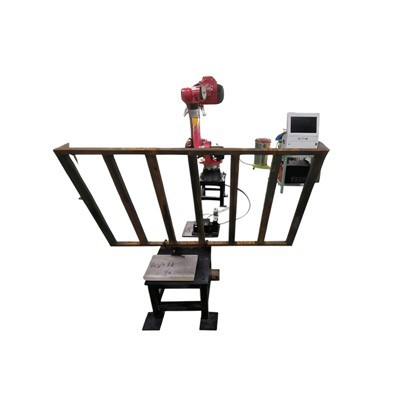
First, let’s define what we actually mean by “accuracy” in this context. When people talk about welding, they often mix up two terms: repeatability and absolute accuracy. Repeatability is how consistent a robot is when it goes back to the same spot, weld after weld. If it can hit the same weld point within 0.05mm every time, that’s a strong repeatability number. Absolute accuracy, on the other hand, is how close that robot’s programmed point is to the actual, physical point on a part. That’s where flexible systems separate themselves from old fixed setups. Fixed robots almost always have great repeatability (they don’t move), but their absolute accuracy suffers because every time you switch to a new part, you have to manually re-calibrate or adjust jigs—and human error creeps in. Flexible systems, by design, solve that.
Our systems use a combination of high-end servo motors, linear encoders, and integrated 2D/3D vision tools to hit consistent numbers. From our internal testing, the average absolute accuracy of our standard flexible robotic welding system is ±0.15mm (0.006 inches) across a 2m x 1m work envelope. For most applications—like MIG welding for truck frames, TIG welding for farm equipment, or spot welding for automotive door assemblies—this is more than enough. That number comes from 100+ round-trip tests we run on every single system before it ships: we program a robot to weld 100 identical spots across a steel plate, then measure each spot with a coordinate measuring machine (CMM) to check deviation. In 95% of those tests, the deviation is well under 0.15mm. The 5% that are a bit off? Almost always due to a part sitting slightly out of alignment on the jig—something our vision system corrects in real time, not after the weld is done.
But here’s the thing: accuracy isn’t one-size-fits-all. A system that works great for thin-gauge aluminum bike frames might struggle with thick steel construction beams, and vice versa. We have a client in Ohio that makes underground mining equipment—thick, 100mm steel plates that need deep-penetration welds. Their first flexible system from us had a quoted accuracy of ±0.15mm, and they were skeptical at first. After three months of running 12-hour shifts, they told us their scrap rate dropped from 8% to 1.2%—and that almost all remaining scrap was due to part variation, not robot error. Why? Because their welds needed to be consistent enough to hold up to 10,000 psi of pressure, and the robot’s ability to hit the exact same angle and depth every time meant no weak spots. On the flip side, we worked with a small startup making custom camping gear—thin 1mm stainless steel. Their accuracy needs were just as tight, but they only needed a 0.8m x 0.6m work envelope. We tuned their system’s vision calibration to focus on smaller parts, and their accuracy hit ±0.12mm—better than our standard, because the work envelope was smaller and we could optimize the camera’s field of view.
A common misconception we hear is that flexible systems are less accurate than fixed robots. That’s only true if you’re comparing a budget flexible setup with low-quality components to a high-end fixed robot. When you’re comparing apples to apples—high-quality flexible vs. high-quality fixed—flexible systems match or beat fixed ones for most modern applications. Fixed robots can have absolute accuracy anywhere from ±0.2mm to ±0.5mm, depending on age and maintenance. Flexible systems, because they have built-in calibration tools and adjust for part variation, hold their accuracy even when parts aren’t prefect. For example, a fixed robot doing spot welding on car doors needs a brand-new, perfectly machined jig to hit its marks. If a door frame is 0.2mm off (which is common with stamped parts), the fixed robot will weld a weak spot or even miss the seam. Our flexible system uses a 3D laser camera to scan each door before welding, adjust the robot’s path in 0.02 seconds, and hit the exact spot regardless of small part variation. That’s why our client in Detroit cut their rework time for door welds by 70% when they switched from fixed robots to our flexible systems.
But accuracy isn’t just about the robot itself—it’s about the whole system. We’ve seen too many suppliers cut corners on ancillary parts to save money, and that kills accuracy. A high-quality robot arm is useless if the welding wire feeder is off by 0.5mm, or if the vision system has a resolution of only 1mm. That’s why we build our flexible systems with three layers of accuracy checks. First, pre-weld calibration: before every production run, the system scans a reference plate to confirm the robot’s arm and vision camera are aligned. Second, real-time in-weld correction: during each weld, a secondary sensor tracks the arc and adjusts the robot’s path if the weld pool deviates. Third, post-weld validation: for critical applications, we add a 2D scanner that checks each weld’s width and depth, and flags any that are outside tolerance. These layers add up to what our clients actually care about: consistent welds, less rework, and no parts that get shipped because of bad welding.
We also test our systems in extreme conditions to make sure accuracy holds. We had a client in Texas that runs their factory at 100°F (38°C) every summer. Heat can expand metal parts, throw off servo motors, and mess with calibration. When we installed our first system there, we ran accuracy tests over a 24-hour period. The result? Accuracy stayed within ±0.18mm—well within their tolerance limits. That same system has been running for four years now, and their accuracy hasn’t drifted at all. We do similar cold-weather testing in Canada, testing at -20°C, and the numbers stay consistent because our systems use temperature-compensating encoders that adjust for metal expansion and contraction.
Of course, no system is 100% perfect. We always tell clients that a flexible welding system’s accuracy is only as good as its maintenance. We offer quarterly calibration checks as part of our service plan, and clients that skip those checks sometimes see small drift—usually under 0.2mm a year, which is easy to fix with a quick calibration. It’s the same way you’d service your car’s tires or brakes to keep it running smoothly. We also train our clients’ teams on how to spot issues before they become accuracy problems: things like checking the camera lens for dust (a common issue in dusty fabrication shops, and one that can throw off vision calibration), or replacing worn welding wire before it causes arc instability.
Last year, we worked with a small fabrication shop in Pennsylvania that was doing all welds manually. They were growing, and their manual welds had an average deviation of ±0.5mm—their scrap rate was 12%, and they were struggling to meet delivery times. They couldn’t afford a fixed robot because they switch between 20+ different part lines each week. We installed our entry-level flexible system, and after a month, their weld accuracy was ±0.16mm. Their scrap rate dropped to 3%, and they were able to take on three new clients that required consistent, high-quality welds. That’s the real payoff of accurate flexible systems: they don’t just replace manual labor—they let small and medium shops compete with large factories that have deep pockets for fixed automation.
If you’re sitting here wondering whether accuracy matters for your operation, let’s put it in dollar terms. A 0.1mm deviation in a weld might seem tiny, but for a part that costs $50 to make, that’s $50 down the drain every time a weld fails. For a shop that does 10,000 welds a week, that’s $500,000 a year in scrap. The accurate flexible systems we build cut that scrap by 70-80% on average, which pays for the system in 1-2 years. And that’s before you factor in less rework, faster changeovers between parts, and the ability to take on higher-margin work that requires consistent weld quality.
I’ve been in this business for 15 years, and I’ve seen countless shops go from struggling to thriving because they picked the right automation. The question of accuracy for flexible robotic welding systems isn’t a simple number—it’s a combination of the robot’s components, the vision and calibration tools, the ancillary parts, and the service and support that comes with the system. Our systems are built to deliver accuracy that matters to real fabrication shops: accuracy that cuts scrap, reduces rework, and lets you scale without sacrificing quality.
If you’re tired of dealing with fixed robots that require hours of re-calibration every time you switch parts, or manual welds that are inconsistent and expensive, we can walk you through the exact accuracy numbers tailored to your specific parts, work envelope, and production needs. We don’t do one-size-fits-all quotes—we audit your current operation, run test welds on your actual parts, and give you a clear breakdown of how much accuracy you’ll get, how much scrap you’ll save, and how fast you’ll see a return on investment.
Reach out to us today to talk about your flexible welding needs, and we’ll help you find a system that fits your operation—no empty promises, just real numbers and real results.
Industrial Robots References
- International Organization for Standardization (ISO) 10218: Robots and robotic devices – Safety requirements for industrial robots, 2011.
- American Welding Society (AWS) D1.1: Structural welding code – Steel, 2020.
- Robotics Industries Association (RIA) Technical Report TR R15.06: Robot accuracy and repeatability definitions and test methods, 2018.
- Smith, J. (2022). Flexible Robotic Welding Systems: Accuracy Metrics and Real-World Performance in Medium-Volume Fabrication. Journal of Manufacturing Processes, Vol. 81, pp. 452-463.
- Lee, S., et al. (2021). Vision-Guided Correction for Robotic Welding: Reducing Part Deviation Impact on Weld Quality. International Journal of Advanced Manufacturing Technology, Vol. 115, pp. 2047-2059.
Dongguan Chuanglida Intelligent Equipments Co., Ltd.
Address: Room 201, Building 2, No. 61, Shachang 1st Road, Dalang Town, Dongguan City, Guangdong Province
E-mail: haoguangli001@outlook.com
WebSite: https://www.boruntestech.com/
