If you’ve ever sat in a waiting room at a gastroenterology clinic, scrolling through old texts or replaying that too-brief chat with your doctor, chances are you’ve heard the term “upper endoscopy” tossed around. As someone who’s worked in endoscopy supply for over a decade—watching doctors run these procedures on patients, troubleshooting scopes at 2 a.m. during emergency cases, and hearing the relief in a patient’s voice when they finally get answers after years of vague symptoms—I wanted to break this down in plain, real language, no stuffy medical jargon that makes your eyes glaze over. Let’s start with what it actually is, how it works, and why it matters, straight from the people who stand between a patient and a clear diagnosis. Endoscope

First, let’s clear up a common mix-up: an upper endoscopy (sometimes called EGD, which stands for esophagogastroduodenoscopy, if you want to throw the clinical abbreviation around at trivia night) isn’t a surgery. It’s a minimally invasive, outpatient procedure that lets a gastroenterologist look directly at the lining of your upper digestive tract—the esophagus (the tube that carries food from your mouth to your stomach), the stomach, and the first part of the small intestine, called the duodenum. Think of it like a tiny, flexible camera on a stick, customized to fit the space it’s exploring, no big incisions, no overnight hospital stay for most people. That simplicity is what makes it such a workhorse in gastroenterology, and it’s why we’ve designed every endoscope we supply to prioritize that ease of use for the doctor and comfort for the patient.
Let’s walk through what happens on procedure day, because I’ve sat in pre-procedure rooms enough to know the nerves that come with this. You’ll check in, change into a gown, and get an IV started in your arm for sedation—most people get conscious sedation, meaning you’re relaxed and sleepy, barely remember the procedure, not fully knocked out like for a major surgery. A nurse will give you a local anesthetic spray for the back of your throat to numb it, so when the scope goes down, you don’t feel that gag reflex that makes people panic. The doctor then guides the thin, flexible endoscope (usually less than a half-inch wide, about the size of a thick pen) through your mouth, down your esophagus, into your stomach, and all the way to the duodenum. The scope has a tiny camera on the tip that sends high-quality, real-time video to a monitor in the room, so the doctor can zoom in on anything that looks off.
And here’s the part that makes this procedure so much more powerful than an x-ray or CT scan: if the doctor sees something that needs further testing or treatment, they can do it right there, without needing a separate procedure. Biopsies (taking a tiny tissue sample to test for things like celiac disease, H. pylori infection, or even early signs of cancer) are quick and straightforward with these scopes. If someone has a bleeding ulcer, the doctor can use tools through the scope to stop the bleeding on the spot. Even removing small polyps in the stomach or esophagus is common during upper endoscopies—no cutting, no stitches, just precise work done through the same tiny entry point. That’s why getting a clear, sharp image from the scope is non-negotiable, which is why we invest so much time into engineering scopes that don’t have blurry optics or flimsy channels that get clogged when doctors are working fast.
Now, let’s talk about who needs an upper endoscopy, because it’s not just for people who are already diagnosed with a serious condition. I’ve seen patients come in with symptoms that have lingered for months—chronic heartburn that won’t respond to over-the-counter meds, persistent nausea or vomiting, difficulty swallowing that makes eating feel like a chore, unexplained weight loss, or even signs of upper gastrointestinal bleeding, like black, tarry stools or vomiting blood. It’s also used for routine screening in people with a family history of esophageal or stomach cancer, or for follow-up after a previous diagnosis, like Barrett’s esophagus, a condition that can lead to cancer if not monitored. What surprises me most is how many people put off getting this done because they’re worried about the discomfort, when in reality, most patients say the procedure is over before they know it, and any minor sore throat or bloating in the day after is way better than living with unaddressed symptoms.
But let’s get real about what goes on behind the scenes to make this procedure safe and effective, because that’s where my side of the work comes in. An endoscope isn’t just a camera—its design has to account for a lot of needs: it has to be flexible enough to bend with the body’s natural curves, durable enough to withstand repeated use and the rigorous cleaning and sterilization required to prevent infection, and the camera has to be clear enough to spot a tiny pre-cancerous cell that a blurry image might miss. I’ve worked with doctors who tell me that a subpar scope with a narrow working channel can make taking a biopsy or removing a polyp 10 times harder, or that a lens that fogs up mid-procedure can delay a diagnosis. That’s why every endoscope we supply is built with features that matter: wide, smooth working channels for tools, high-resolution imaging that stays consistent even during long procedures, and ergonomic handles that cut down on hand fatigue for doctors who might be using the scope for hours each day. We also work closely with clinics to make sure they have the tools they need for every step—from the scope itself to the biopsy forceps and cleaning solutions, because a procedure is only as good as the equipment that supports it.
Common misconceptions about upper endoscopy are something I hear all the time, and they’re worth addressing. First, no, you can’t eat or drink for 6 to 8 hours before the procedure—this is to make sure your stomach is empty, so the doctor has a clear view, not because they’re trying to make you uncomfortable. Second, the sedation is safe for almost everyone, though your doctor will review your medical history to make sure it’s right for you; I’ve never seen a patient have a bad reaction, and the team at every clinic is trained to handle any minor side effects, like a little drowsiness after. Third, you don’t need someone to drive you home, but you should arrange for a ride, because the sedation will make you groggy for a few hours, and you shouldn’t drive or make important decisions that day.
What I’ve learned over the years in this work is that upper endoscopy is more than just a medical procedure—it’s a bridge between feeling unwell and getting answers. I remember a patient a few years back, a 42-year-old teacher who’d been fighting persistent stomach pain for 18 months, seeing three different doctors who all just told her it was stress or IBS. She got her upper endoscopy, and the doctor found a rare type of ulcer that was easy to treat once they knew what it was; she emailed the clinic a month later saying she was back to grading papers without pain, and it made every late night troubleshooting a defective scope or helping a clinic order replacement parts worth it. That’s the impact of this work: giving doctors the tools to find what’s wrong, and patients the relief of not feeling lost anymore.
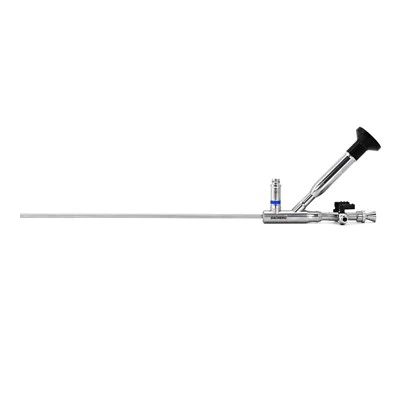
If you’re a clinic manager or gastroenterologist reading this, you know that reliability and quality in endoscopy equipment don’t just make procedures run smoother—they keep patients safe and get accurate diagnoses faster. We specialize in endoscopy supply solutions tailored to small clinics and large hospital systems alike, with flexible ordering, regular maintenance support, and replacement parts available when you need them, not when it’s too late. Whether you’re setting up a new GI suite or looking to upgrade your current scopes to improve image quality and procedure efficiency, we can work with you to find the right equipment for your needs and budget. Ready to talk through your facility’s needs? We’re here to help.
Container for Sterilizing Medical Equipment References
American College of Gastroenterology. Upper Endoscopy (EGD). Updated 2022.
National Institute of Diabetes and Digestive and Kidney Diseases. Upper Endoscopy: What You Need to Know. Updated 2023.
Society of Gastroenterology Nurses and Associates. Endoscope Care and Processing Guidelines. Updated 2021.
Zhejiang Jiacheng Medical Instrument Co., Ltd.
We’re well-known as one of the leading endoscope manufacturers and suppliers in China, specialized in providing high quality customized service to global clients. Please feel free to buy discount endoscope from our factory. Contact us for more details.
Address: Building 8, Shutai · Fuchun Innovation Park, No. 516, Majia Road, Fengchuan Subdistrict, Tonglu County, Hangzhou, Zhejiang Province, China
E-mail: Ken.huangfu@jiachengmedical.com
WebSite: https://www.jiachengmedical.com/
