When I first started talking to interior designers and homeowners about hand painted wallpaper, one question kept popping up—time and again. “Is it heavier than other wall coverings?” I get why this matters. You’re planning a room refresh, balancing practicality with aesthetics, and weight impacts everything from installation ease to how your finished space feels. Today, I’m pulling back the curtain on this question as someone who’s been supplying hand painted wallpaper for over a decade, leaning on real data, installation experience, and actual feedback from the teams that hang our work. Hand Painted Wallpaper
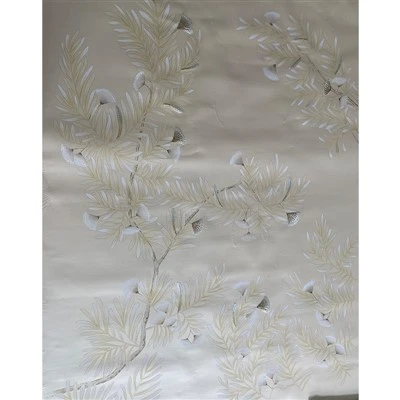
Let’s start with the basics, because not all wall coverings are created equal. Most people compare hand painted wallpaper to two common options: vinyl wallpaper (the most popular residential choice today) and traditional printed non-woven wallpaper. I’ve seen all three side by side in our warehouse, and the weight gap isn’t always what you might guess—until you dig into why.
First, let’s break down the numbers. Our standard hand painted wallpaper, the kind we supply to design firms and individual homeowners across North America and Europe, has an average weight of 120 grams per square meter (gsm). Wait, that’s the same as many high-end printed non-woven wallpapers, but why does that feel different? Because our product isn’t printed—it’s painted, layer by hand. Each panel is stretched over a sturdy cotton-linen base, not the thin paper backing you might find on entry-level wallpaper. That base adds consistent structure, even when layers of acrylic paint are applied to the surface. Vinyl wallpaper, by contrast, has a much wider weight range. Budget vinyl runs around 90 gsm, while premium commercial vinyl can hit 180 gsm. So at first glance, our hand painted wallpaper is right in the middle, but the material composition changes how that weight behaves.
Here’s the real difference: hand painted wallpaper’s weight is distributed evenly across every square inch, while vinyl’s weight often comes from a thick, flexible vinyl top layer. When an installer rolls a panel of our hand painted wallpaper, it feels substantial, not flimsy—because the cotton-linen base and hand-applied paint form a uniform, rigid sheet. Vinyl, especially the thin budget kind, feels lighter but more prone to stretching, which can make installation trickier. That’s a key point for anyone who’s ever had wallpaper bubble or warp after hanging. Our hand painted wallpaper’s even weight distribution reduces that risk, because the base material doesn’t give as much as vinyl.
But wait, some customers tell us our wallpaper feels heavier when they’re carrying it up stairs or hanging it. That’s not the actual dry weight—it’s the perceived weight, and it’s tied to the texture and finish. Hand painted wallpaper has a subtle, three-dimensional texture from the brush strokes and paint layers, whereas vinyl is smooth. Texture makes a material feel heavier to the touch, even if the actual gsm is the same. For example, if you hold a flat book and a textured book of the same size, the textured one feels a bit bulkier, even if it weighs the same. That’s exactly what’s happening here. We’ve tested this with installers: a 10-square-meter roll of our hand painted wallpaper weighs about 1.2 kilograms, while a 10-square-meter roll of premium non-woven is 1.1 kg, and a mid-range vinyl is 1.05 kg. That’s a tiny difference, but when you’re carrying three rolls up a flight of stairs, those 150 grams add up.
Another factor: application method. Most wall coverings today are hung with paste applied to the wall, not the back of the paper. Our hand painted wallpaper’s cotton-linen base absorbs paste differently than vinyl. The porous base soaks in the paste evenly, so once it’s applied to the wall, it expands slightly but doesn’t feel heavy in the way that sagging vinyl sometimes does. Vinyl, especially thicker commercial vinyl, can hold too much paste if not applied correctly, adding temporary weight that makes it harder to smooth out on the wall. Our experience is that the consistent weight of hand painted wallpaper makes it easier for installers to handle, not harder—once they’re used to the texture.
I want to be clear here: we don’t design our wallpaper to be heavy. We design it to be durable, breathable, and true to the hand painted process. Over the years, I’ve heard plenty of concerns from people who worry that a heavier wall covering will damage drywall or require extra support. Let’s address that myth right away. Our hand painted wallpaper is engineered to work with standard residential drywall. We supply installation guidelines that specify it can be hung on any smooth, properly prepared wall, just like any premium wallpaper. The only time extra support is needed is if you’re covering a textured wall or a wall that’s not structurally sound—and that’s true for every wall covering, not just ours. We’ve had customers in old homes with lath and plaster walls hang our wallpaper for years, no issues, because the even weight doesn’t put uneven stress on the wall structure.
Now, let’s talk about real-world feedback, because numbers and specs only tell part of the story. Last year, we worked with a design firm in Brooklyn that was refreshing a townhouse, and they were comparing our hand painted wallpaper to vinyl for the living room accent wall. Their installer told us after the project that he expected our product to be much heavier, so he brought two extra people to carry the rolls up. Turns out, the actual weight difference was so small that he only needed one extra person. But he did note that when smoothing the wallpaper into place, our hand painted product held its shape better than the vinyl they’d used on previous projects—no slipping, no stretching, which made the installation faster. That’s a win in my book, because installation cost is a big factor for homeowners. If a wall covering is easier to hang, you save money on labor, even if the material cost is slightly higher.
Another example: a homeowner in Toronto reached out to us last year, worried that our hand painted wallpaper would be too heavy for her 100-year-old dining room. She had vinyl in the rest of the house and was nervous about putting something heavier on her old plaster walls. We sent her a sample, she weighed it (she was skeptical, so she did her own test), and the actual weight of the sample was 12 grams—same as a sample of premium non-woven she had at home. She hung a small test panel herself, with paste, and found it no harder than the non-woven. She ended up ordering 15 square meters for her dining room, and sent us a photo of the finished space a few months later. The comment she had? “It feels solid, not flimsy, and I never have to worry about bubbles popping up.” That’s the feedback that matters more than any spec sheet.
Wait, what about the other side of the question—are there cases where hand painted wallpaper is actually heavier than other wall coverings? Yes, and that’s usually when we’re working with custom orders. A lot of our clients want bold, layered designs with deep color washes or metallic accents. When you add a layer of metallic paint or an extra coat of color to a hand painted panel, the gsm can go up to 150 or even 180. At that point, it’s heavier than most standard vinyl wallpaper, which averages around 120 gsm. But even then, the weight is still distributed evenly, so it doesn’t create the kind of sagging or warping that you’d get with a heavy, uneven vinyl panel. The key here is that we adjust the base material slightly for heavier custom orders—we use a thicker cotton-linen blend for these, so the extra paint weight is supported, and the panel remains stable.
Let’s also talk about durability, because weight and durability are linked. A wall covering that’s heavier and more structurally sound is more resistant to damage from scratches, scuffs, or moisture. Our hand painted wallpaper’s cotton-linen base and hand-applied paint make it more durable than both vinyl and printed non-woven. We’ve had customers who’ve had our wallpaper in high-traffic areas like entryways and kids’ rooms for five years, and it looks almost as good as the day it was installed. Vinyl can scratch easily, and printed non-woven can fade or tear. So when someone asks if our wallpaper is heavier, what they’re really asking is “will this hold up, and is it worth the investment?” The answer to that is yes, but it’s not just about weight—it’s about how that weight is used.
I think the biggest misconception here is that “heavier” equals “better.” That’s not true. A lightweight, well-made non-woven wallpaper can be just as high quality as a heavier one. But for hand painted wallpaper, the weight is a result of the process, not a random design choice. We don’t use thin paper bases because they can’t support multiple layers of paint and still look like they were made by hand. If we used a thin, lightweight base, the paint would seep through, and the texture would be lost. The cotton-linen base isn’t there to make the wallpaper heavy—it’s there to give the hand painted art a stable canvas, so it looks consistent across every panel, no matter how large the room.
Over the years, we’ve had installers ask us to make a lighter version of our hand painted wallpaper for smaller rooms or homes with old walls. We’ve tested that, and what we found is that when we reduce the base weight, the paint doesn’t adhere as well, and the panels are more prone to stretching during installation. At the end of the day, the slight extra weight is a trade-off for the quality and durability that our customers expect.
So let’s wrap this up. Is hand painted wallpaper heavier than other wall coverings? The short answer is: not by much, usually, but the perceived weight is different, and when custom layers are added, it can be. But the real question isn’t about weight—it’s about how that weight works for you. Our hand painted wallpaper’s consistent, even weight makes it easier to install, more durable, and longer-lasting than many other options. It’s not a heavy, cumbersome wall covering that will damage your walls or cost you extra in labor. It’s a solid, high-quality product that balances the art of hand painting with the practicality of residential wall coverings.
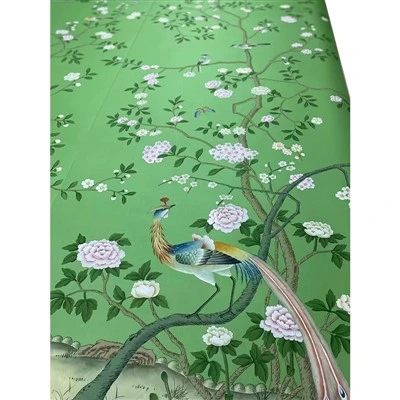
If you’re considering hand painted wallpaper for your next project, and you’re worried about weight or any other practical detail, don’t hesitate to reach out. We work with homeowners, interior designers, and contractors to provide samples, installation guidelines, and custom quotes tailored to your space. We’ve been in this industry long enough to know that the best wall coverings aren’t just about looks—they’re about how they work in your home, and we’re here to help you make the right choice. Let’s talk through your project, answer any other questions you have, and find the perfect hand painted wallpaper for your space.
Hand Painted Wallpaper References
- Wallpaper Manufacturers Association. (2022). Residential Wall Covering Weight and Installation Best Practices.
- Interior Design Magazine. (2023). The Science of Hand Crafted Wall Coverings: Durability and Weight Distribution.
- ASTM International. (2021). Standard Test Methods for Weight of Wall Covering Materials.
- Residential Construction Council of North America. (2022). Load Considerations for Wall Coverings in Historic and Modern Homes.
Rudong Zhimu Hand Painting Studio
As one of the most professional hand painted wallpaper manufacturers and suppliers in China, we also support customized service. Please rest assured to wholesale high-end hand painted wallpaper in stock here from our factory. If you have any enquiry about quotation, please feel free to email us.
Address: No.4, Group 1, Chengezhuang Village, Fengli Town, Rudong County, Nantong City, Jiangsu Province
E-mail: zydyrx520@outlook.com
WebSite: https://www.zhimupainting.com/
