If you’ve ever stopped to inspect a mains plug, you’ve probably noticed it’s designed to look unbreakable: hard plastic casing, solid metal pins, and that familiar weight that signals durability. But here’s a question I hear constantly from electricians, small business owners, and even homeowners who’ve dealt with damaged outlets after a spill or a dropped appliance: are there actually shock-proof mains plugs? Mains Plug
As someone who’s spent the last 12 years sourcing and supplying mains plugs—working directly with manufacturers, testing every batch that leaves our warehouse, and answering a steady stream of customer questions about safety—I can tell you the answer isn’t a simple “yes” or “no.” It’s more nuanced than that, and it hinges on how you define “shock-proof,” the global safety standards that govern plugs, and the real-world challenges that even the most robust plugs face.
Let’s start with the basics: what causes an electric shock from a mains plug? Mains plugs deliver alternating current (AC) at 110-120V in North America and 220-240V in most of Europe, Asia, and Australia—voltage that’s more than enough to cause serious injury or even death if it reaches the human body. Shocks happen when two parts of a live circuit (say, a bare pin and a metal tool) create a path for current to flow through someone. Common culprits are damaged plugs (cracked plastic, frayed wiring), exposed pins, or plugs inserted into faulty outlets.
Now, the term “shock-proof” is often thrown around in marketing, but there’s no global standard that officially defines it. Most regulatory bodies—like the International Electrotechnical Commission (IEC), the Underwriters Laboratories (UL) in the U.S., and the European Committee for Electrotechnical Standardization (CENELEC)—don’t recognize “shock-proof” as a formal rating. They do, however, have strict requirements for plugs that prevent electric shock through design, testing, and material selection. That’s where the confusion starts: many manufacturers use “shock-proof” as a marketing buzzword to describe plugs that meet these safety standards, but not all of them actually do the job as intended.
Over the years, I’ve worked with customers who’ve told me they bought a “shock-proof” plug online that failed a simple test: when water spilled on it, current leaked. Or a plug that cracked after being dropped from a kitchen counter, exposing the live pins. Those are not shock-proof—they’re just basic plugs with a catchy name. So what makes a plug actually effective at preventing shock? Let’s break down the key features we look for when sourcing products for our clients.
First, insulation materials. The plastic used for plug casings isn’t just any plastic—it’s high-temperature thermoplastic (usually polycarbonate or nylon) that can withstand up to 100°C of heat from regular use and can resist impacts, cracks, and moisture. For context, a standard polycarbonate casing has an IK08 impact rating, meaning it can survive a 5 joule impact—roughly equivalent to dropping a 5kg weight from 10cm. That’s more than enough for most household uses, but for industrial settings or outdoor use, we recommend plugs with even thicker casings and additional moisture resistance, like those rated IP44 for splash protection. The key here is that good insulation is non-negotiable for shock prevention, but it’s not unbreakable. Drop a plug from a 20m scaffolding, and even the best polycarbonate casing can crack, exposing live parts.
Second, safety shutters for pin holes. This is a feature I swear by—most modern plugs have small plastic shutters inside the pin holes that only open if both pins are inserted at the same time. That means a child (or a curious pet) can’t stick a fork or a screwdriver into a single pin hole and get a shock. I remember a few years back, we worked with a family who had a toddler, and they switched all their plugs to models with shutters after a close call with a paperclip. Before shutters were mandatory in many regions (they became required in the U.S. in 2008, for example), that kind of shock risk was far more common. Shutters aren’t marketed as “shock-proof,” but they’re one of the most effective low-cost features for preventing accidental shocks.
Third, fused plugs. In regions like the UK, every mains plug has a built-in fuse that breaks the circuit if too much current flows. That’s not just for protecting appliances—it also limits the amount of current that could reach someone if there’s a fault in the plug. A standard 13A fuse will blow almost instantly if there’s a short circuit, stopping the current before it can cause serious harm. I’ve seen this work firsthand: a customer recently called us, panicking because their power drill’s cord frayed, and the plug’s fuse blew before they even noticed any sparking. Without that fuse, the frayed wire could have exposed live parts and caused a shock.
But here’s the thing none of these features can do: make a plug 100% shock-proof. The moment a plug is damaged—whether by a heavy impact, prolonged exposure to extreme heat or cold, or tampering—those safety features stop working. Last year, we got a return from a customer who had a plug that was run over by a lawnmower. The casing split open, the pins bent, and the internal wiring was exposed. Even though that plug had met all UL standards when it left our warehouse, the damage made it a major shock hazard. That’s why we always emphasize to our customers that no plug is indestructible, and regular inspection of plugs (for cracks, frayed cords, or loose pins) is non-negotiable.
Another common myth is that outdoor plugs are shock-proof. While many outdoor-rated plugs are IP67 (fully waterproof), they’re still not designed to be submerged in water while connected to a power source. I once had a landscape contractor who tested this by submerging a plug in a bucket of water—needless to say, it shocked the water (and the smart meter connected to it) and ruined the plug. Even with the best insulation, water is a conductor, and it can seep into small cracks or gaps in the casing, creating a path for current. That’s why outdoor plugs should always be used in weatherproof enclosures when not in use, and never handled with wet hands.
So if “shock-proof” is a marketing term, what should you be looking for when choosing a safe plug? The answer is not a single “shock-proof” product—it’s a plug that meets the relevant safety standards for your region, has the features tailored to your use case, and is used and maintained correctly. For example, a plug for a kitchen appliance (near water) should have IP44 moisture resistance and safety shutters. A plug for a workshop (where tools are dropped frequently) should have a thick impact-resistant casing. A plug for a child’s nursery should have shutters and a secure fit in the outlet to prevent loose connections.
As a supplier, we make sure every plug we stock is third-party tested to IEC, UL, or CENELEC standards, depending on where it will be used. We’ve built relationships with manufacturers that prioritize safety over cost, which means we don’t carry the cheap no-name plugs you might find at a discount store that cut corners on insulation or shutters. We also offer educational resources—like guides on plug inspection and safety—because we believe that the best way to prevent shocks isn’t just selling a product, but helping our customers use it correctly.
I’ve been in this industry long enough to see the impact of bad plugs. A few years ago, we worked with a client who lost a small business because a cheap, untested plug caused a fire when it overheated. It’s a reminder that safety isn’t something to compromise on, no matter how convenient a product sounds. The good news is that modern plugs are far safer than they were even 20 years ago, thanks to those mandatory safety features that have become standard in most regions.
But here’s the honest truth: there is no such thing as a 100% shock-proof mains plug. All plugs have limits. The key is understanding what your needs are, looking for products that meet the right safety standards for your area, and treating your plugs with care—inspecting them regularly, replacing damaged ones, and never overloading outlets or using mismatched plugs.
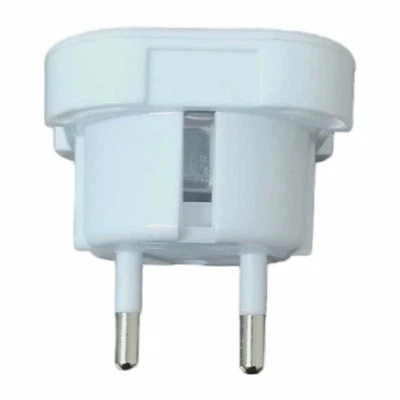
If you’re a homeowner looking to upgrade your plugs, an electrician sourcing products for a job, or a business owner needing bulk plugs for your facilities, I’m here to help. We stock a range of safe, tested plugs tailored to different uses, and we can answer any questions you have about choosing the right product for your needs. Whether you’re looking for standard household plugs, industrial-grade options, or something for outdoor use, we’ve got you covered. Don’t hesitate to reach out to discuss your requirements—we’re here to make sure you get the safest, most reliable plugs for your situation.
Hardware Fittings References:
International Electrotechnical Commission. (2020). IEC 60884-1: Plugs and socket-outlets for household and similar purposes – Part 1: General requirements.
Underwriters Laboratories. (2022). UL 498: Attachment Plugs and Receptacles.
European Committee for Electrotechnical Standardization. (2021). EN 60884-1: Plugs and socket-outlets for household and similar purposes – Part 1: General requirements.
National Electrical Manufacturers Association. (2019). Safety Guidelines for Mains Plug Maintenance and Inspection.
Foshan Haosheng Technology Co., Ltd.
As one of the leading mains plug manufacturers and suppliers in China, we warmly welcome you to buy advanced mains plug made in China here and get pricelist from our factory. All customized products are with high quality and competitive price.
Address: No.4, Jinsha Liansha Shangliang Development Zone Avenue, Danzao Town, Nanhai District, Foshan City, Guangdong Province, China
E-mail: 13925140140@163.com
WebSite: https://www.hssocket.com/
