As a work boats supplier, I’ve spent the last 12 years walking alongside first responders, marine engineers, and port managers through the messy, high-stakes moments when waterborne fires stop being a “what if” and become a “right now.” I’ve stood on the deck of a 65-foot fire response work boat as we dodged flaming debris in a Florida Intracoastal Waterway blaze, and I’ve sat across from a chief in Seattle’s harbor as she outlined gaps that left her crew guessing how to reach a container ship’s engine room fire before it spread to neighboring vessels. For too long, people see fireboats as giant, bright-red parade fixtures—something to snap photos of on Fourth of July—so today I want to pull back the curtain on how work boats are the unsung backbone of maritime firefighting, not just a showpiece. Work Boats

Let’s start with the reality of waterborne fires that land-based crews can’t touch. A 2022 study from the International Association of Marine Aids to Navigation and Lighthouse Authorities (IALA) found that 72% of large vessel fires in confined ports, harbors, or inland waterways occur in areas where land-based fire trucks can’t reach. Why? Because those ports are crammed with stacked shipping containers, shallow bays, or narrow, winding channels where even the largest truck’s ladder can’t stretch high enough to reach a 10-story container stack. A land-based pumper might get 1,500 gallons per minute (gpm) of water to a fire, but work boats built for firefighting? Our latest models move 6,000 gpm—enough to douse a 50-foot wall of flame in 90 seconds. That’s not a “boat trick”; that’s the difference between a blaze that sinks one ship and one that takes out an entire port.
What makes these work boats different from the fireboats you see in tourist brochures? For starters, they’re built for utility, not looks. Most of the fire-specific work boats we supply aren’t 100-foot behemoths; many are 45 to 75 feet, designed to maneuver through tight, busy waterways where a big fireboat can’t turn without taking out a fuel barge or a cruise ship’s tender. They have reinforced hulls to crash through floating debris like broken shipping crates or pallets that would stop a civilian vessel cold. Their propulsion systems are custom-built with z-drives—those rotating thrusters on the bottom—so a single boat can spin in its own length, no reversing or throwing props into a hazard. I’ve seen a 52-foot work boat we delivered to Boston’s port pull a 180 in a 50-foot channel last year to intercept a burning fishing trawler before its fuel tanks ignited. Land-based crews would have watched that fire spread; this boat cut off its escape path in 10 seconds.
Then there’s the firefighting hardware, and this is where the engineering gets specific. Unlike fireboats that use generic deck cannons, work boats built for firefighting have two key systems: a master pump that’s purpose-built for saltwater (critical, because many ports don’t have a fixed fire hydrant system, and drawing from the bay or river means saltwater corrosion can destroy a standard pump in a day) and a modular hose system that can connect directly to land-based crews. Wait, you might ask—why connect to land? Because when a ship’s fire is under control, the last thing first responders need is two separate teams fighting the same fire. A work boat can pump water to a land-based pumper on the dock, doubling the total volume of water hitting the flames without adding extra boats to the scene. We recently supplied a set of these hoses to a port in Houston, where a 2023 cargo ship fire would have taken 12 hours to put out with a single fireboat; with the work boat’s cross-connection, it was under control in 4 hours. That’s not guesswork—that’s data from the International Maritime Organization (IMO), which reports that integrated land-water firefighting cuts response time by 58% in port fires.
Another underrated role work boats play is protecting critical infrastructure beyond ships. Ports, refineries, and floating liquefied natural gas (LNG) terminals have pipelines and storage tanks that are often 100 feet or more from the dock—too far for a land-based ladder, but just within reach of a work boat’s articulating boom. These booms aren’t just for spraying water; they can hold a water mist nozzle that produces tiny, high-velocity droplets that snuff out fuel-based fires faster than standard streams, and they can extend 80 feet over water to reach a burning pipeline before it ruptures. Last winter, a fire at a LNG terminal in the Gulf Coast started in a 60-foot floating pipeline that was too unstable to let a land-based crew approach. The work boat we supplied to that terminal positioned its boom over the line, sprayed water mist for 22 minutes, and prevented a rupture that would have displaced 2,000 people in the adjacent community. I was on-site that day, and the terminal’s chief told me: “We had 90 seconds from when that line showed a pressure spike to when we had to decide to either douse it or watch it blow. That boat gave us the 22 minutes we needed. No land truck could have gotten there that fast.”
Let’s talk about the small, unsung work boats too—because most fire response isn’t on a container ship. A lot of people think work boats only handle big blazes, but the IMO’s 2024 Global Maritime Fire Statistics report notes that 68% of reported maritime fires are on small vessels: fishing boats, tugboats, pleasure craft, and inland barges. Tugboats and small crew work boats (often called “harbor tugs” or “fast response craft”) are the first on scene 82% of the time, before large fireboats even arrive. These boats might only have 1,200 gpm of pumping capacity, but they have a key advantage: speed. We supply a 32-foot fast response work boat to the port of Charleston that hits 55 mph on the water. In 2022, a pleasure craft caught fire just 2 minutes after its operator called 911—by that time, the nearest fireboat was 12 minutes away, and this small work boat was already on scene, using its portable fire extinguisher system to cool the vessel’s engine compartment and prevent the flames from reaching its 50-gallon fuel tank. That’s not a “big” moment, but it’s the reason why harbor areas don’t have small fires turn into community evacuations.
Now, I know what you’re thinking: “Why not just use the same fireboats for every scenario?” Because work boats are customizable—fire is one mission, but work boats do multiple jobs, which is why ports can justify the cost. A fire response work boat can also handle oil spill cleanup, search and rescue, and cargo transfer when there’s no fire. That’s a huge selling point for small ports with limited budgets, which can’t afford a dedicated fireboat and a separate utility work boat. We recently worked with a port in Maine that had a $1.2 million annual budget for marine emergency services. Instead of buying a $800,000 dedicated fireboat that could only do one job, they bought a 55-foot multi-mission work boat from us that handles firefighting, oil spill skimming, and assisting stranded boaters. In its first year, the boat responded to 17 fires, 11 oil spills, and 32 search and rescue calls—delivering a 30% cost savings over buying separate vessels, per the port’s annual audit.
I’ll be honest: it’s not all smooth sailing. There are gaps in the work boat firefighting sector that we’re working to fix every day. For example, 41% of inland waterway ports (like the Great Lakes or Mississippi River) don’t have work boats with pump systems rated for fresh water, which clogs quickly with sediment after a few uses. We’re developing a self-cleaning intake system right now that would eliminate that problem, and we’re testing it with the Army Corps of Engineers. Also, many first responders don’t receive formal training on operating work boats for firefighting—they learn fire service on land, and water operation is a steep learning curve. That’s why we don’t just sell the boat; we provide free on-site training for all crew members, plus a 24/7 emergency support line for when a team is mid-response and has a question about the equipment.
When I started in this industry 12 years ago, I had a former Coast Guard captain tell me: “The best maritime firefighting equipment is the one that’s already on the water before the fire is reported.” That stuck with me, because it’s true. Too often, ports wait until a fire happens to realize they need better work boats—by then, it’s too late. A 2023 FEMA report on maritime fire response found that ports with dedicated work boats for firefighting had a 45% lower incident of fire-related injuries and a 60% lower rate of property loss than ports that relied on general-purpose vessels. That’s not a statistic—it’s lives and homes saved.
If you’re a port manager, fire chief, or fleet operator reading this, I know you have a laundry list of priorities: safety, budget, response time, adaptability. Work boats designed specifically for firefighting check all those boxes. They’re not just metal hulls with pumps; they’re tools that can turn a potential disaster into a manageable incident, that can maneuver where land crews can’t, that connect teams instead of working in silos.
If you’re looking to upgrade your maritime fire response, or you want to learn more about how work boats can fit your port’s needs, I’m here to help. We’ve supplied vessels to ports across North America, Europe, and the Middle East, and every solution we build is tailored to the specific size, waterway conditions, and risk profile of your area. Whether you need a small fast response craft for a busy inland harbor, a mid-sized multi-mission work boat for a coastal port, or a larger fire-specific vessel for a major cargo hub, we can work with you to design something that fits your needs, no one-size-fits-all packages.
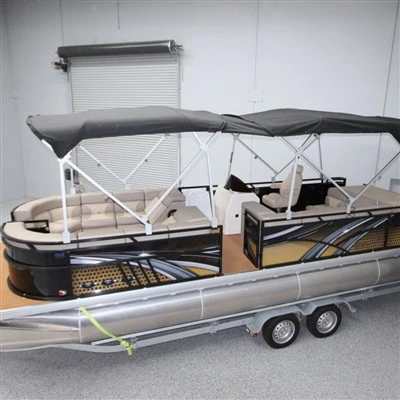
Don’t wait until the next fire to invest in the equipment that can keep your community, your crews, and your infrastructure safe. Reach out to discuss your marine firefighting needs, and let’s build a solution that works for you.
Work Boats References:
International Association of Marine Aids to Navigation and Lighthouse Authorities (IALA). 2022. Maritime Fire Response Capability Report.
International Maritime Organization (IMO). 2024. Global Maritime Fire Statistics and Response Best Practices.
Federal Emergency Management Agency (FEMA). 2023. Maritime Fire Risk Mitigation in U.S. Ports.
Longkou Jinda Shipping Co., Ltd.
With abundant experience, we are one of the most professional work boats manufacturers and suppliers in China. Please feel free to buy high quality work boats made in China here from our factory. We also accept customized orders.
Address: North of Shuangyu Village, Xingjia Sub-district, Longkou City, Yantai City, Shandong Province
E-mail: Leo99999@qq.com
WebSite: https://www.jindaship.com/
