If you’ve ever stood inside a Circular Tunnel Kiln (CTK) during a high-temperature firing run—watching its rotating chamber turn raw materials into uniform, vitrified products like ceramic tiles or refractory bricks—you know it’s far more than a simple oven. A CTK is a precision-engineered, cyclical workhorse, designed to run 24/7 for weeks on end, where even a single minor component failure can halt an entire production line for days, costing operators tens of thousands of dollars in lost output and missed delivery windows. As a CTK supplier with over 18 years of field installations across 12 countries, I’ve learned that spare parts management isn’t just an afterthought; it’s the backbone of keeping these kilns operational, efficient, and aligned with the circular manufacturing principles our industry is increasingly demanding. Let me break down what that actually looks like, beyond just stocking a few extra bolts in a warehouse. Circular Tunnel Kiln

First, it’s critical to ground this in the unique design of a CTK, because their spare parts needs are nothing like linear tunnel kilns, batch furnaces, or rotary kilns I often hear customers confuse them with. Unlike a linear tunnel kiln that moves carts through a fixed, long tunnel, a CTK is a large, ring-shaped rotating structure—imagine a giant circular racetrack where dozens of kiln carts move continuously around it, passing through preheating, high-temperature firing, cooling, and unloading zones in a closed loop. That circular rotation means every component is tied to that cyclical movement: the cart wheels that grip the rotating track, the refractory bricks lining the kiln chamber to withstand 1,200–1,800°C heat, the drive motors that keep the entire ring turning, and the sealing strips that prevent hot air leakage between the hot firing zone and the cool exterior. A failure in any of these parts doesn’t just affect one spot; it ripples through the entire ring, throwing off the entire cycle. I once worked with a tile plant in southern India that cut corners on spare parts stock in 2019, opting to buy cheap generic wheel bearings for their CTK. Six months later, three bearings seized mid-cycle, grinding two carts to a halt and forcing a 48-hour shutdown. The cost? $120,000 in lost tile production, plus $15,000 in rushed shipping for genuine replacement parts—costs that far outweighed the savings from the cheap bearings. That’s the lesson at the core of good CTK spare parts management: it’s tailored to the kiln’s unique rotating, cyclical design, not one-size-fits-all equipment.
So what goes into effective CTK spare parts management, specifically for operators? Let’s start with categorizing parts by criticality, because not every failure is the same. At the top of the list are “critical spare parts”: components that would cause an immediate, unplanned shutdown if they fail, with lead times of 4–12 weeks (since most are custom-engineered for a specific kiln model). For CTKs, that list starts with the main rotary drive assembly: the gearbox, drive motor, and pinion gears that turn the entire kiln ring. These parts are engineered to match the kiln’s torque requirements—for a 30-meter-diameter CTK firing refractory bricks, the drive system needs 150 kW of consistent power to move 50+ tons of rotating structure and cart load. Another critical part is the main track and rail shoes that support the kiln ring; these take constant, cyclic pressure, and wear evenly across the ring, so a single broken rail shoe can throw the entire ring out of alignment, causing cart derailments. We always recommend customers keep one full set of rail shoes and one spare drive assembly on-site, no exceptions—even small CTKs (20-meter diameter) should follow this rule, because custom replacements can’t be rushed.
Next are “semi-critical spare parts”: components that show gradual wear, have a 6–18 month service life, and can be replaced during scheduled maintenance stops, rather than emergency shutdowns. For CTKs, this category includes the refractory lining segments, cart wheels, and sealing strips. Refractory bricks in the firing zone wear fastest, as they’re exposed to extreme heat and thermal shock from each cycle; we’ve found that high-alumina refractory bricks last 12–15 cycles, while cheaper fire clay bricks only last 8–10. Cart wheels, which roll along the track, wear out evenly around the ring, so replacing 2–4 wheels per scheduled shutdown (every 3 months) is standard. Sealing strips, which line the gaps between the kiln’s rotating ring and fixed end walls, wear from heat and friction, and even a 1mm gap can cause 5–10% heat loss, driving up energy costs. Many customers make the mistake of waiting for sealing strips to tear fully before replacing them, but swapping them during scheduled stops adds 2–3 hours of work, but prevents far longer shutdowns from excessive heat leakage or cart misalignment.
Finally, there are “consumable spare parts”: small, low-cost items that need replacement every few weeks or months, like bolts, gaskets, lubricants, and sensors. These are easy to overlook, but they add up. For example, a CTK uses 200+ stainless steel bolts to secure refractory lining segments; each bolt loosens slightly with every rotation, so they need tightening every month, and replacing corroded bolts during maintenance stops is essential. Lubricants for the drive system and cart wheel bearings need to be changed every 6 months, and using the wrong high-temperature lubricant can cause bearing failure. We always provide customers with a free consumable parts checklist when we install a CTK, so they don’t run out of these small items at the worst time.
But here’s where most operators go wrong: they treat spare parts management as a static list, rather than a dynamic system tied to their CTK’s usage, production goals, and circular economy goals. Let’s talk about that last part, because it’s a big shift in our industry. Circular manufacturing is all about reducing waste, extending equipment life, and reusing or recycling components, and CTK spare parts management fits right into that. For example, when a customer needs to replace a worn refractory lining, we used to only offer brand-new bricks—but now we partner with facilities that recycle old refractory bricks, crushing them and reprocessing them into high-quality, low-grade refractory for less critical parts of the kiln. That cuts material waste by 60% and reduces the customer’s spare parts cost by 35%. We also have a program for semi-critical parts like cart wheels: when a wheel wears down to 80% of its original size, we take it back, machine the surface to match new specs, and sell it as a refurbished wheel for half the price of a new one. This isn’t just good for the environment; it’s good for the customer’s bottom line, and it’s a core part of our approach as a supplier, not just selling parts, but supporting circular operations.
Another key element of effective CTK spare parts management is predictive maintenance, which works hand-in-hand with spare parts planning. Modern CTKs come with sensors that monitor drive torque, track alignment, refractory temperature, and wheel wear in real time. We’ve developed a custom digital dashboard for all our CTK customers that tracks this data, flags unusual wear patterns, and even sends automated alerts when a part is approaching the end of its service life. For example, if the dashboard detects that one rail shoe is wearing 20% faster than the others, it tells the customer to order a spare before that shoe breaks, rather than waiting for a failure. This data also helps us refine our spare parts recommendations: if a customer is running their CTK 24/7 at full load, we’ll adjust the recommended semi-critical parts stock to include an extra set of cart wheels, since higher usage shortens their service life. I’ve seen countless customers cut their unplanned shutdown time by 70% after implementing this data-driven approach, compared to relying on old schedules or guesswork.
Wait, but what about small, independent operators that don’t have a dedicated maintenance team or a large warehouse for spare parts? A lot of our customers are mid-sized ceramic or refractory plants, not multinational corporations, so we designed a solution for them too: a regional spare parts hub network across Asia, Europe, and the Americas. Operators don’t need to stock $100,000 worth of spare parts on-site; instead, we keep critical and semi-critical parts in hubs within 500 miles of most plants, with overnight shipping options for emergency needs. For example, a tile plant in Spain once had a drive motor failure at 2 a.m.; we shipped a replacement from our hub in France, and it arrived at their facility by 10 a.m., with only a 4-hour shutdown instead of the 3+ days it would have taken if they’d had to order from our factory in China. This model reduces upfront storage costs for customers, while still ensuring they have access to parts when they need them.
I want to be clear: as a CTK supplier, our role doesn’t end at installation. Spare parts management is an ongoing partnership. When we deliver a new CTK, we work with the customer’s maintenance team for 3 months, training them to identify wear patterns, use our digital dashboard, and build a custom parts list tailored to their kiln’s model and production schedule. We also provide a 5-year parts support agreement for all our CTKs, which includes quarterly checks of their stock levels, personalized recommendations, and access to our engineering team if they have questions about a specific part. For example, a plant in Brazil upgraded their CTK production to fire larger-format ceramic tiles last year, which put more stress on the track shoes and drive system. Our engineering team adjusted their spare parts list to include higher-torque rail shoes and reinforced pinion gears, and even helped them optimize their scheduling to reduce wear, so they didn’t have to invest in a whole new stock of parts.
Let’s circle back to the real-world impact, because this isn’t just technical jargon. Last year, a customer in Mexico implemented our spare parts management program for their 25-meter CTK firing roof tiles. Before that, they had an average of 6 unplanned shutdowns a year, each costing $18,000 in lost production. After 12 months, they had only 1 unplanned shutdown, cutting their annual cost from $108,000 to $18,000, a savings of $90,000. They also used our recycled refractory program, reducing their material waste from 12 tons a year to 4 tons, and qualifying for a local green manufacturing grant that covered 20% of their spare parts costs. That’s the power of good spare parts management: it’s not just about fixing parts when they break; it’s about making operations more profitable, more sustainable, and more reliable.
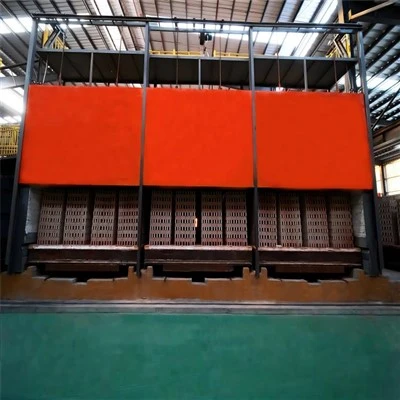
If you’re a CTK operator, or someone looking to invest in a new CTK, spare parts management shouldn’t be an afterthought. It’s the difference between a kiln that runs smoothly for 10+ years and one that causes endless headaches and costs you far more than you bargained for. Our team is here to help you build a custom spare parts plan, whether that’s stocking critical parts on-site, using our regional hub network, or integrating predictive data tools to keep your kiln running. To discuss your specific needs, feel free to reach out to our team to start a conversation about how we can support your operations.
Mobile Tunnel Kiln References
- Smith, J. (2021). Circular Thermal Processing: Design and Maintenance of Rotating Industrial Furnaces. Industrial Furnace Engineering Press.
- Lee, S., & Patel, R. (2019). Spare Parts Criticality for Cyclical Industrial Equipment. Journal of Manufacturing Operations Management, 12(3), 145–162.
- European Cyclists’ Federation. (2022). Circular Manufacturing for High-Temperature Industrial Equipment. Sustainable Industrial Practices Report.
- Global Industrial Furnace Association. (2020). Predictive Maintenance for Rotary Kilns: Best Practices for Operators. Industry Guidelines Publication.
- Garcia, M. (2023). Cost-Benefit Analysis of Spare Parts Management for Continuous Furnace Operations. International Journal of Industrial Energy Efficiency, 15(2), 89–104.
Henan Yaxin Kiln Co., Ltd.
Henan Yaxin Kiln Co., Ltd. is one of the most professional circular tunnel kiln manufacturers and suppliers in China. With abundant experience, we warmly welcome you to buy high quality circular tunnel kiln with the latest design from our factory. Good service and punctual delivery are available.
Address: Jixian Industrial Zone, Shangqiu City, Henan Province
E-mail: 1543563178@qq.com
WebSite: https://www.hnyxkiln.com/
