Alright, let’s cut to the chase—if you’ve ever wondered how those trusty jet pumps move fluids without all the messy moving parts, you’re in the right place. I’m part of the team supplying jet pumps to everything from remote agriculture wells to municipal water treatment plants, and let’s be real: most people hear “jet pump” and think it’s some complicated aerospace thing. Nah, it’s way simpler than that, and way more badass for what it does. Jet Pump
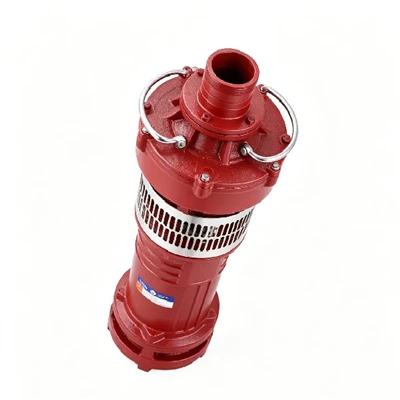
First off, let’s ditch the textbook jargon. No “ejector venturi effect” right off the bat—we’ll get there, but let’s start with a relatable example. Ever used a garden hose to siphon water out of a clogged rain barrel? You put your thumb over the end, lift it, and suddenly water’s flowing on its own. That’s the basic idea of a jet pump, just scaled up (and way more efficient) for big jobs. Unlike a regular centrifugal pump that has spinning impellers slinging water around, jet pumps have almost no parts that touch the fluid. No wearing impellers, no seals to replace every year, and that’s why our clients love ‘em—less downtime, fewer headaches.
So how does it actually work? Let’s break it down step by step, no fancy equations. Think of a jet pump as two side-by-side chambers: the power fluid inlet and the suction inlet, both feeding into a tiny, narrow throat called the venturi. Here’s the play-by-play: first, you send high-pressure fluid (usually water, but sometimes oil or even gas depending on the setup) through the power inlet. This fluid hits that narrow venturi so fast, it creates a low-pressure zone right at the throat—like when you blow over a piece of paper and it lifts; the fast-moving air creates low pressure above it.
That low pressure is the magic part. It sucks in whatever fluid you need to move—could be well water, industrial sludge, whatever—through the suction inlet. Once that two fluids mix in the venturi, they slow down a little, and their combined pressure rises again. Finally, they shoot out the discharge outlet, ready to go wherever you need. Let’s make this tangible: if you have a shallow well, a jet pump sits right above ground, pulls water up through that low-pressure zone. For deep wells? We have a submersible jet pump version that sits down in the well, same principle but tweaked to handle more vertical distance. No need for a bunch of primers or fancy priming mechanisms either, because that low pressure does all the heavy lifting.
Wait, let’s clear up a common myth: people think jet pumps only work for water. Nope. We’ve supplied jet pumps to food processing plants moving fruit juice concentrate (carefully calibrated so the jet doesn’t break down the product’s texture), mining operations moving slurry that’s 30% solids, even chemical plants moving corrosive fluids that would eat away at regular pump parts. The key is matching the pump’s materials (stainless steel, cast iron, PVC) to the fluid, and adjusting the venturi size for the flow rate. That’s where our team comes in—we don’t just sell off-the-shelf units; we work with clients to tweak every part so it fits their exact needs.
Let’s talk about why jet pumps beat other pump types for certain jobs. Take centrifugal pumps, for example. They’re great for high flow, but if you’re pumping from a deep well (like over 25 feet), they lose prime all the time—you have to fill them with water to get them started, which is a nightmare if the well is remote and you have to hike out there every time. Jet pumps? They self-prime, thanks to that low-pressure zone creating its own suction. And since no impeller spins, there’s nothing to wear out. One of our clients, a small-scale farmer out in central Texas, told us his old centrifugal pump would burn out every 18 months, and he had to replace seals every 6 months. Since we installed our jet pump two years ago, he’s only changed a couple of O-rings—and that’s it. No breakdowns during planting season, no wasting money on emergency repairs. That’s the kind of win we care about.
Of course, jet pumps aren’t one-size-fits-all. Let’s get into the different types, because that’s where most people get confused. The two main categories are shallow well jet pumps and deep well jet pumps. Shallow well pumps are exactly what they sound like: for wells under 25 feet deep. They have a single jet assembly, mounted right on the pump, and they pull water up from the ground. Easy to install, cheap to maintain, perfect for small residential properties or hobby farms. Then there’s the deep well jet pump, which has two jets: one that sits down in the well (the ejector) and the pump unit above ground. The ejector creates that low pressure down in the well, so it can pull water up from wells 200+ feet deep. We’ve also got multi-stage jet pumps for even deeper wells, though those are more for agricultural or municipal use. And for specialty jobs, like moving gas or air, we supply gas jet pumps—same principle, just using compressed air instead of liquid as the power fluid.
Wait, let’s address a question we get all the time: “What about efficiency?” I won’t lie—jet pumps aren’t as efficient as centrifugal pumps for super high-flow, low-head jobs. But for medium flow, high-head (that’s the pressure needed to lift water far), they’re totally competitive, especially when you factor in the low maintenance. Our clients don’t just look at the upfront cost; they look at the 5-year total cost. A jet pump might cost a bit more initially, but it saves them thousands in repairs and downtime over its 15+ year lifespan. That’s the math we lay out for every new client—no fine print, no hidden fees.
I want to share a quick story to illustrate that. Last year, we worked with a small brewery that needed to move wort (that’s the unfermented beer, for the uninitiated) from their mash tun up to the fermentation tanks, which are 30 feet high. They were using a diaphragm pump that kept getting clogged with grain particles, and it would break every few months. They tried a centrifugal pump, but it couldn’t generate enough pressure to lift the wort that high. We installed a custom stainless steel jet pump, sized just for their flow rate, with a wide venturi to avoid clogging. A year later, they’re still using the same pump, no clogs, no breakdowns. They told us it’s been one of the best investments they’ve made. That’s the kind of feedback that makes us proud to be in this business.
Now, let’s get practical: what do you need to consider if you’re thinking about a jet pump? First, know your lift height—how far do you need to pull the fluid from its source? For example, if your well is 50 feet deep, you can’t use a shallow well pump; you’ll need a deep well unit. Second, what kind of fluid are you moving? Is it water, slurry, food product, corrosive chemical? That determines the material of the pump and jet parts. Third, what’s your flow rate? How many gallons per minute do you need? Too small a pump and you’ll be waiting around; too big and you’re wasting electricity. Fourth, do you need self-priming capabilities? If your source is above the pump, a standard jet pump will work, but if it’s below, self-priming is non-negotiable.
Here’s the thing: a lot of pump suppliers will just push the biggest, cheapest unit they have. But we take the time to ask those questions, because we know a pump that’s sized right and matched to your fluid is a pump that lasts. We don’t do “one size fits all” here—every jet pump we supply is tailored to the job, not the other way around.
Now, I know some of you are thinking: “Is a jet pump right for my specific application?” Maybe you’re a homeowner with a 40-foot well, or a contractor who needs to dewater a construction site, or a factory manager looking to replace a failing pump. Whatever your need, we’re here to help. We don’t just sell equipment—we offer free consultations, walk you through all the options, and even help with installation if you need it. No salesy pitch, no pressure, just real advice from people who’ve been in this industry for years.
At the end of the day, jet pumps are one of those unsung heroes of fluid movement. They’re simple, reliable, and way more versatile than most people give them credit for. They don’t have spinning parts that wear out, they self-prime, and they can handle all kinds of fluids—all while keeping downtime to a minimum. That’s why we’ve been supplying jet pumps to businesses and homeowners across the country, and that’s why we’re confident we can find the right solution for you.

If you’re tired of dealing with pumps that break all the time, or wasting money on repairs and replacements, let’s chat. Drop us a line to talk through your needs, and we’ll help you pick the perfect jet pump for your job. No obligation, no hard sell—just real talk about moving fluids the smart way.
QY Oil-Immersed Cast Iron Submersible Pump References
- Karassik, I. J., Messina, J. P., Cooper, P., & Heald, C. C. (2008). Pump Handbook (4th ed.). McGraw-Hill Education.
- Crowe, C. T., Schwarzkopf, J. D., Sommerfeld, M., & Tsuji, Y. (2011). Multiphase Flows with Droplets and Particles (2nd ed.). CRC Press.
- US Department of Energy. (2020). Pump Systems Matter: Best Practices for Pump Selection and Operation. Office of Energy Efficiency and Renewable Energy.
Longbiao Pump Industry Co., Ltd.
Address: Unit 101, Building 11, Pan’ao Entrepreneurship Park, Daxi Town, Wenling City, Taizhou City, Zhejiang Province, P.R. China
E-mail: 1653746797@qq.com
WebSite: https://www.cnlongbiao.com/
